Client Brief & Background
Urdu is one of South Asia's most eloquent, historically profound, and culturally influential literary languages, commanding a dedicated global community of millions across India, Pakistan, the Gulf States, Europe, and North America. For more than three decades, Hayat-e-Nau (حیاۃ نو), published under the auspices of Al-Tawheed Qadria Jamiatul Falah, has served as a cornerstone of Urdu intellectual discourse—regularly publishing peer-reviewed research papers, literary criticism, contemporary social analyses, theological treaties, and classical Urdu poetry.
However, relying exclusively on physical print distribution presented severe modern barriers. Escalating international freight expenses, postal transit delays across overseas hubs, and the absence of digital search indexing made it increasingly difficult for university scholars, researchers, and diaspora readers to access back editions or submit scholarly manuscripts. The editorial council commissioned Aligarh Web Solutions to architect a world-class digital publishing portal (`atqjamiatulfalah.org/hayat-e-nau`) that would preserve the authentic visual elegance of classical Urdu calligraphy while meeting modern web accessibility and academic indexing standards.
The Challenge: Nastaliq Typography, Bidirectional Flow & Decades of Print Archives
Digitizing a revered non-Latin academic publication presented formidable visual and structural engineering hurdles:
-
✓Complex Nastaliq Script Rendering: Unlike standard Arabic or Persian Naskh scripts which flow along a horizontal baseline, traditional Urdu typography demands the sloping, stacked, vertical ligatures of the Nastaliq script. Loading full Nastaliq font files on the web typically results in massive 2MB+ file payloads, sluggish page loads, or jarring layout shifts.
-
✓Bidirectional (BiDi) Layout Flipping: Academic articles frequently mix Right-to-Left (RTL) Urdu prose with Left-to-Right (LTR) citations, English bibliographies, Digital Object Identifiers (DOIs), and international ISBNs without breaking paragraph alignment or punctuation placement.
-
✓Digitization of 30+ Years of Back Issues: Over 120 historic print editions and 1,400+ monographs existed only on physical paper or corrupted legacy desktop-publishing files (InPage Urdu), requiring systematic cataloging and conversion into searchable web formats.
-
✓Global Low-Bandwidth Accessibility: Many of the journal's scholars and institutional readers in South Asia access the web on low-tier mobile hardware over 3G/4G connections, demanding sub-2-second loading times without typography degradation.
Solution & Design Rationale
We engineered an elegant, custom-crafted digital journal portal prioritizing native Urdu reading ergonomics, lightning-fast delivery, and academic rigor.
Custom-SubsetFonted Noto Nastaliq Pipeline
Rather than relying on generic fallback system fonts or bulky multi-megabyte type packages, we engineered a bespoke WOFF2 glyph subsetting pipeline for Google's *Noto Nastaliq Urdu*. By selectively packaging core Urdu ligatures, common Arabic loan-words, and diacritics, we compressed the font footprint down to just 92KB, allowing instant text rendering without any Flash of Invisible Text (FOIT).
Semantic CSS Logical Properties & RTL Architecture
We built the front-end layout strictly utilizing modern CSS Logical Properties (`margin-inline-start`, `padding-inline-end`, `inset-inline`, and `text-align: start`). This ensures full bidirectional parity: readers navigate naturally from right to left across menus, sidebars, and footnotes, while embedded English abstracts and author affiliations seamlessly retain standard Latin formatting.
Decade-by-Decade Digital Archival Engine
We created an intuitive, searchable digital library organized chronologically by Decade, Year, Volume, and Issue. Each issue includes high-resolution, compressed downloadable PDF fascicles, individual article abstracts, and complete author indexes.
Heritage-Inspired Color Palette & Editorial Aesthetics
The visual identity draws inspiration from traditional South Asian bookbinding and leather-bound scholarly manuscripts: imperial royal aubergine (#1f0e1a / #3d1c33), warm parchment ivory (#fdfbf7), and burnished metallic gold (#d4af37), delivering a serene and culturally resonant reading environment.
Technical Architecture & Stack
The publishing engine pairs specialized typography tooling with a resilient, globally cached content management core:
Visual Gallery & Interface Highlights
Explore high-resolution interface captures, Nastaliq typography, and archive layouts engineered for Hayat-e-Nau Monthly Journal:
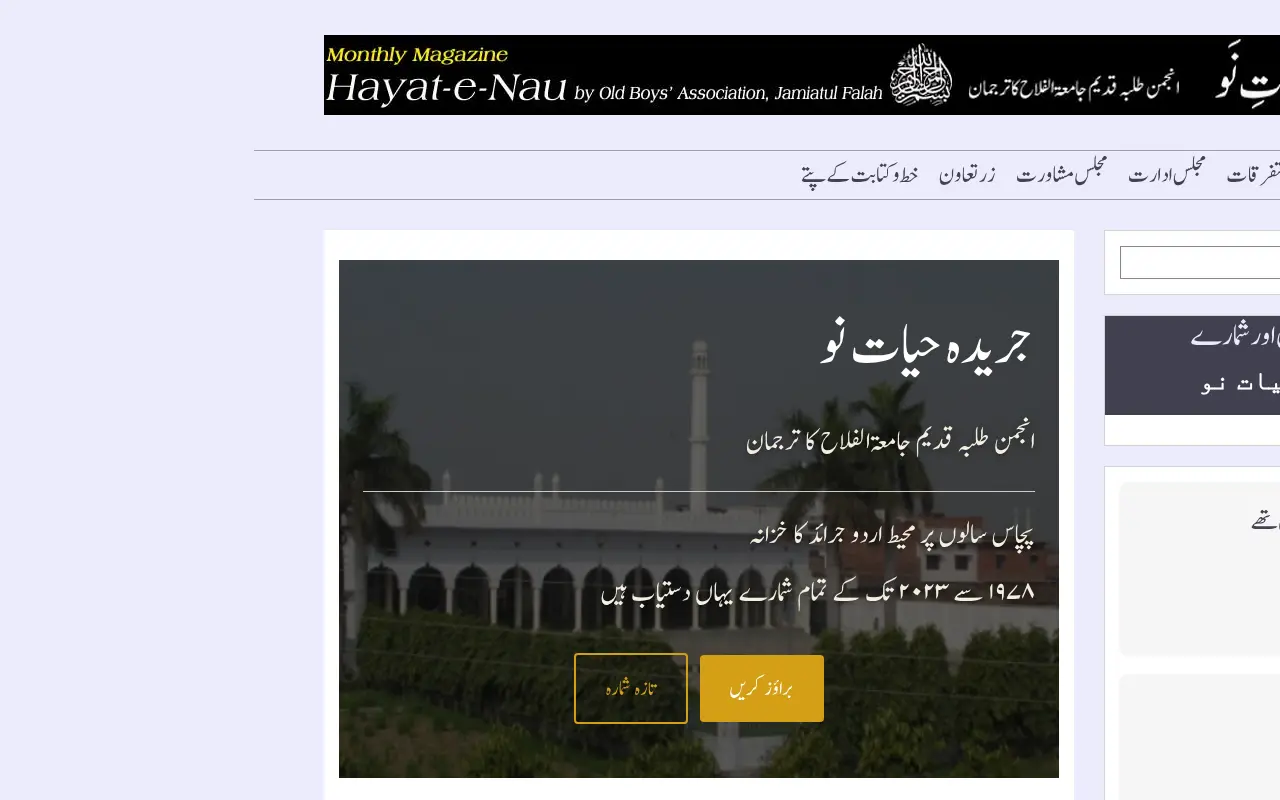 Desktop View
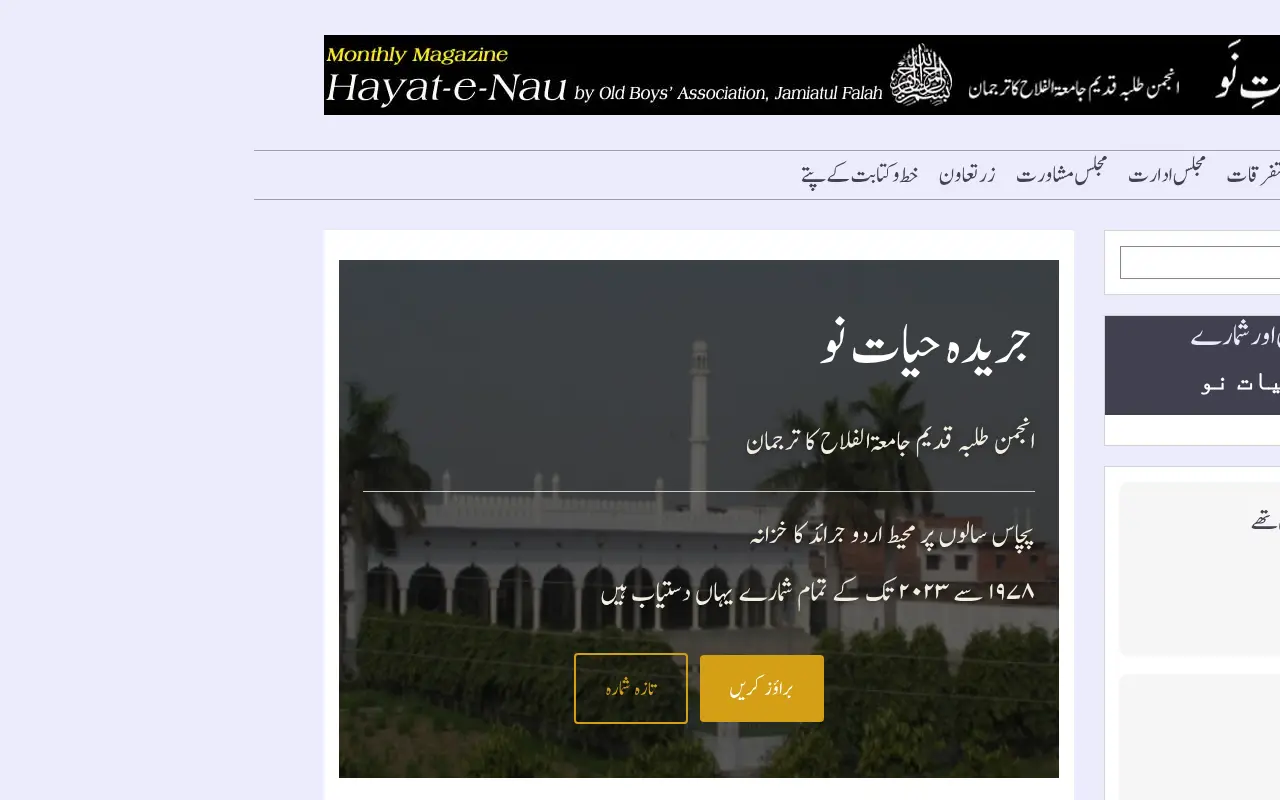 Article Catalogue
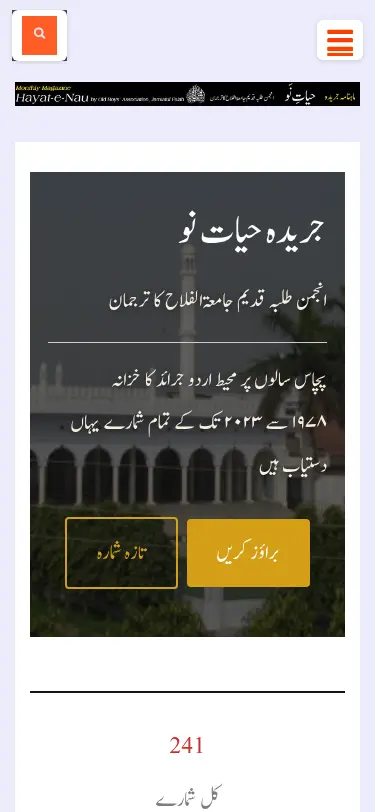 Mobile View (375px)
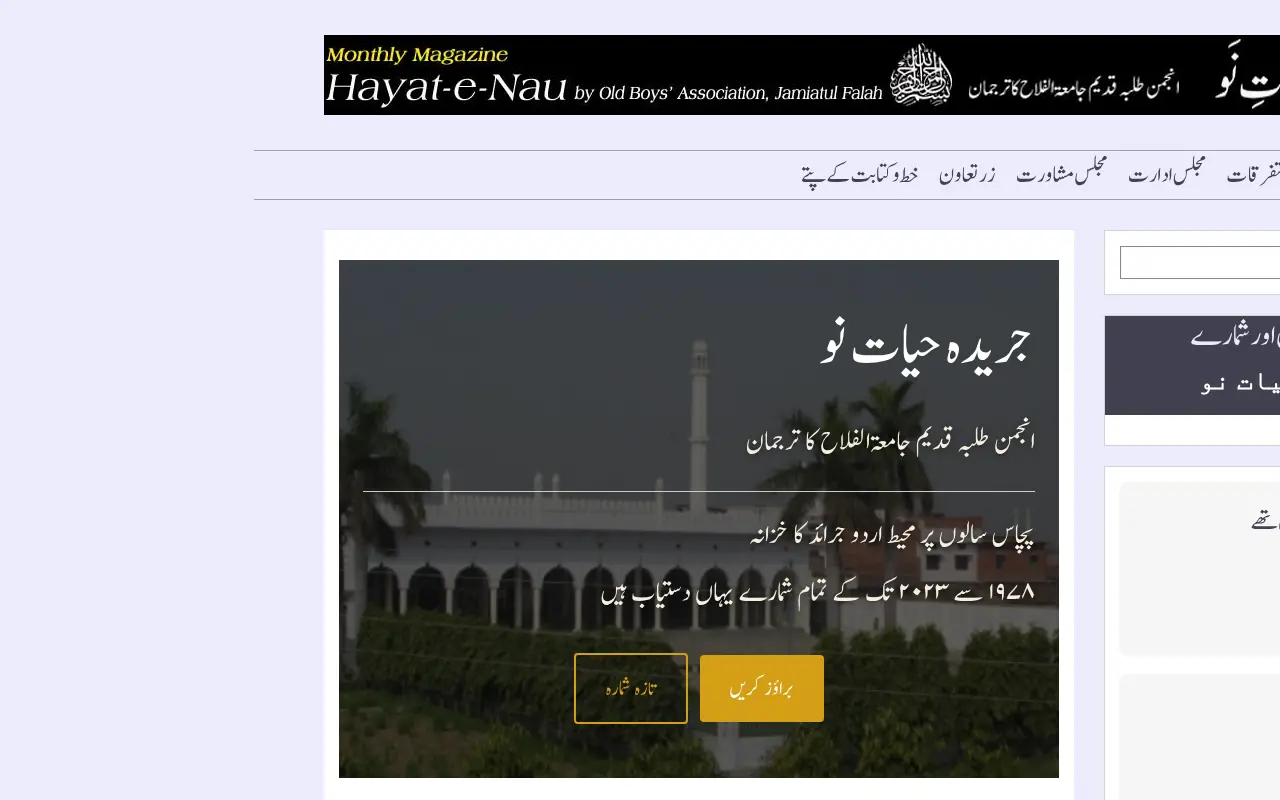 Digital Archive
Quantified Results & Real Impact
The digitization of Hayat-e-Nau transformed a regionally constrained quarterly publication into an internationally accessible academic reservoir:
The editorial committee eliminated more than 60% of international physical postage costs while expanding their submission pool by over 85%, receiving original research contributions from Urdu scholars across Oxford, AMU, Jamia Millia Islamia, and international humanities departments.
"Hayat-e-Nau has been the voice of thoughtful Urdu scholarship for decades. Bringing this prestigious publication into the digital age required deep technical mastery and cultural sensitivity. Aligarh Web Solutions achieved something extraordinary: the platform feels authentically Urdu with its exquisite Nastaliq typography, while matching the speed, elegance, and global accessibility of top international academic journals. Our readers across the world are overjoyed."
Publishing a Journal, Magazine, or Multi-Language Archive?
We build academic journal portals, OJS installations, multilingual publishing platforms, and digital archives with flawless non-Latin typography and global CDN delivery.